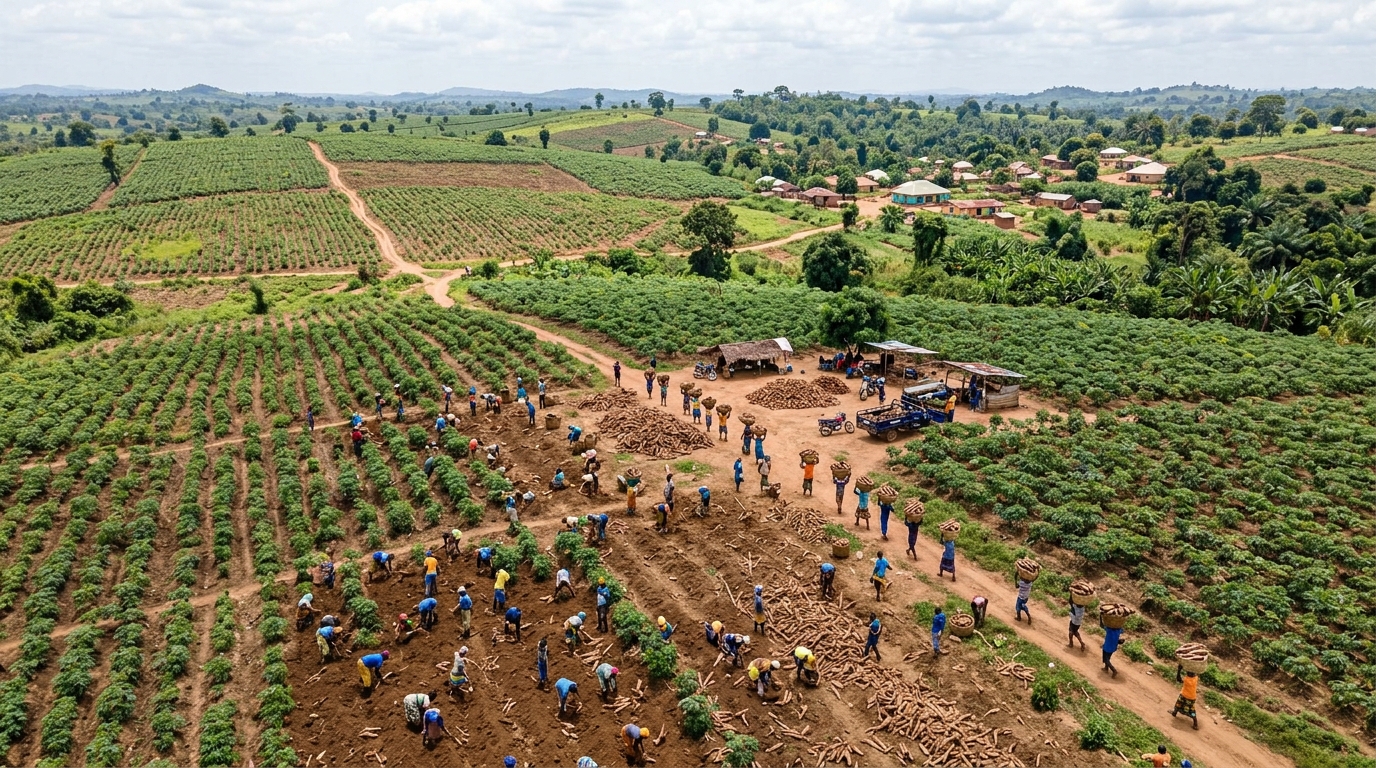
Nigeria is the world’s largest producer of cassava, generating approximately 60–63 million tonnes annually. Despite this scale, less than 10% of production is processed into industrial derivatives such as starch, leaving a significant gap between raw material availability and value-added output. As a result, Nigeria remains a small but emerging exporter of cassava starch.
Exports have grown from under 1,000 tonnes in 2022 to over 2,600 tonnes in 2023, driven primarily by regional demand—especially from Ghana. While this volume is negligible compared to global leaders like Thailand and Vietnam, the upward trend signals a developing opportunity for international buyers seeking competitive, non-GMO starch sources.
For importers and manufacturers, Nigeria represents a high-potential but still maturing supply origin, requiring careful supplier selection, clear specifications, and structured risk management.
Nigeria’s Production and Processing Reality
Nigeria’s cassava production base is vast and deeply rooted in smallholder farming, involving millions of growers across the country. However, industrial processing remains limited. Most cassava is consumed locally as food, with only a small share entering formal processing channels.
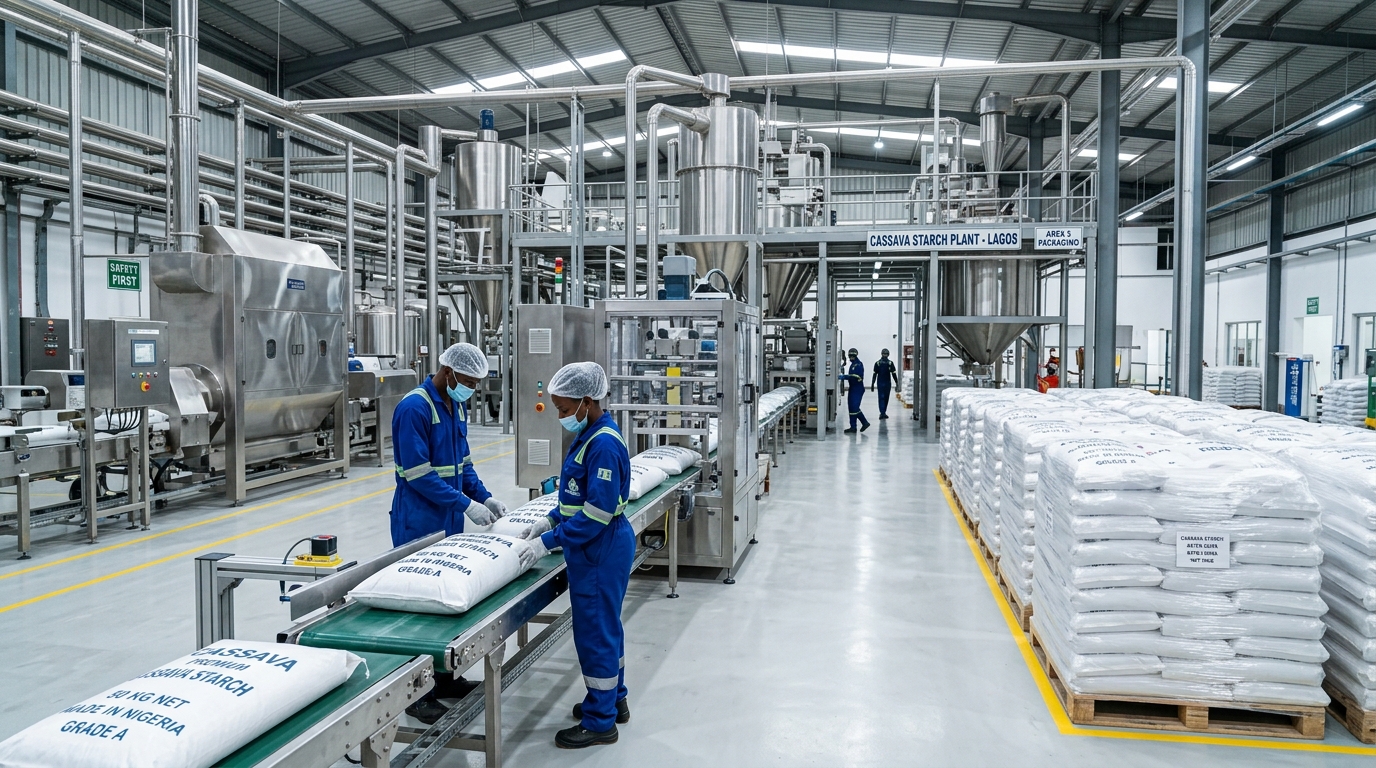
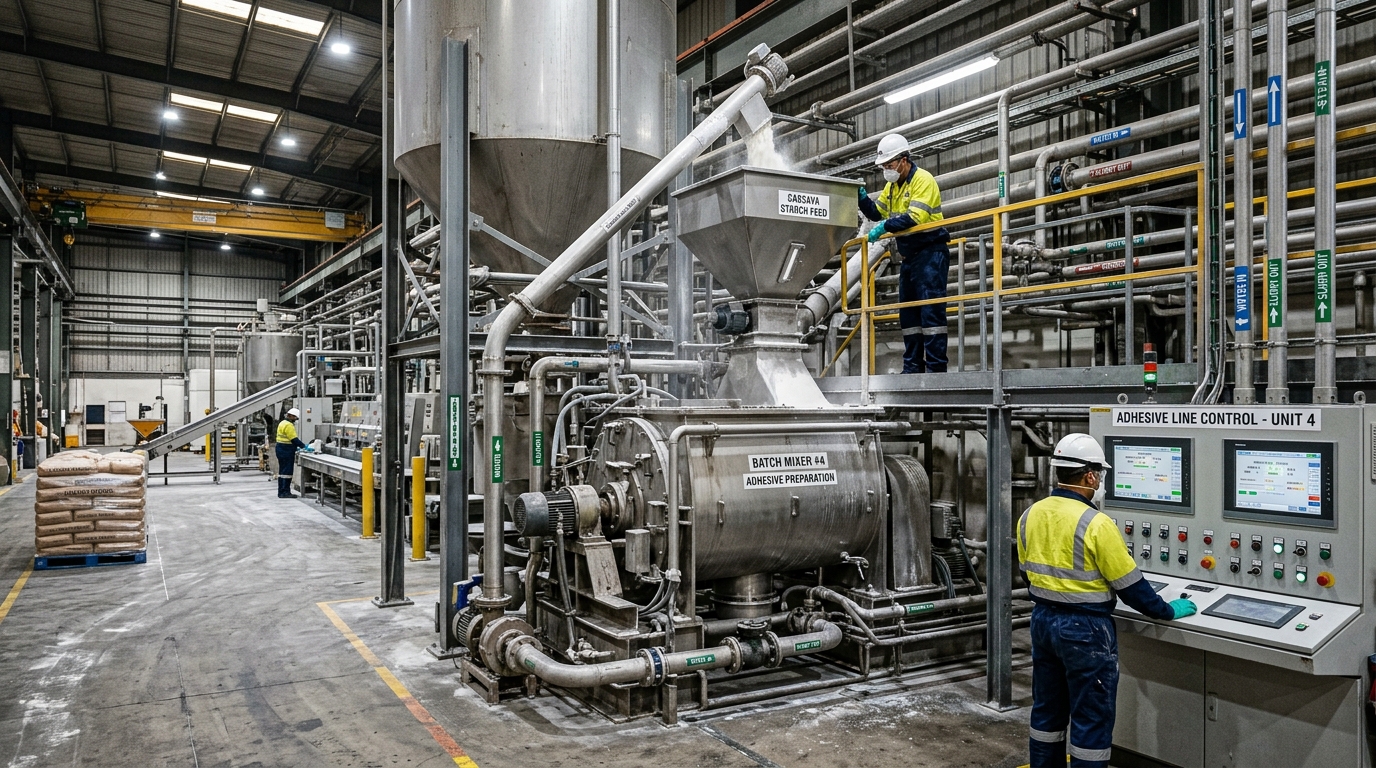
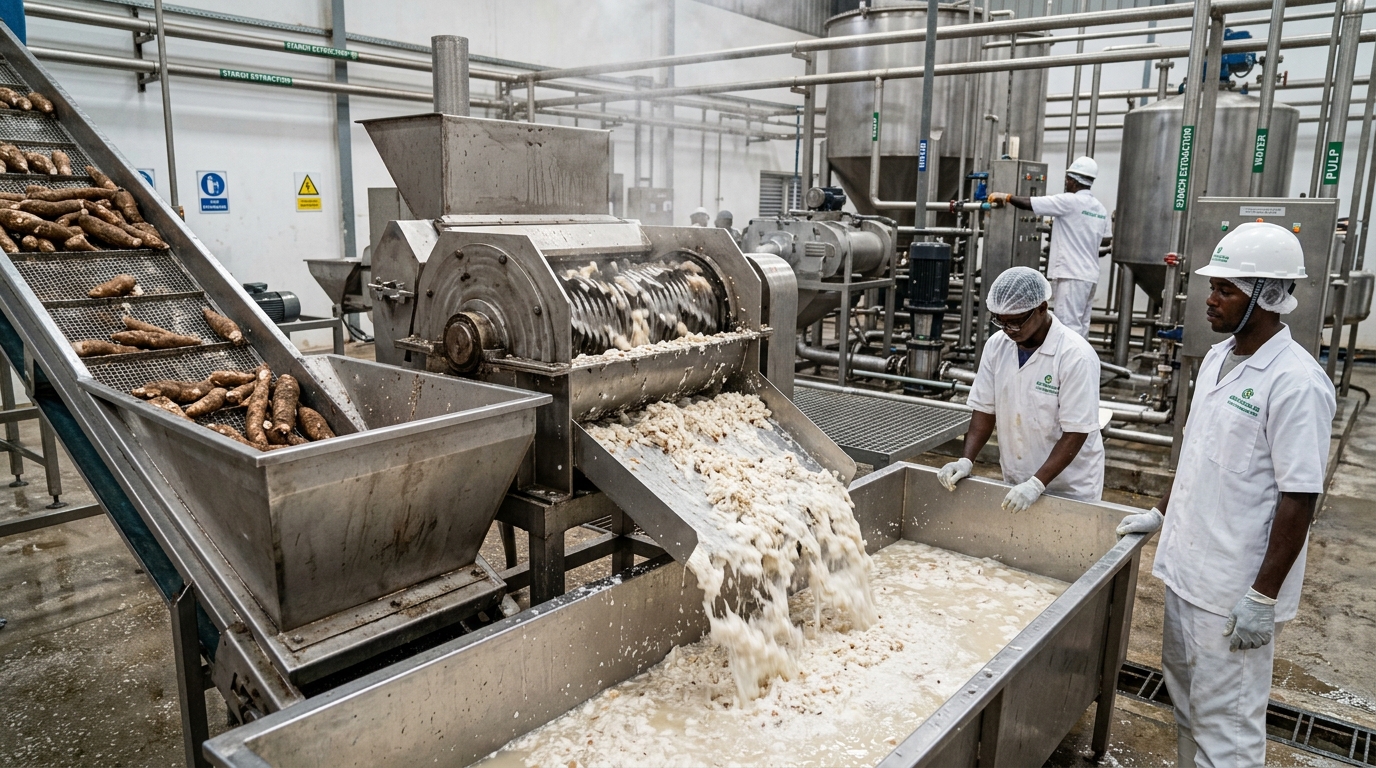
The country’s starch production capacity is concentrated in a handful of medium-scale processors such as Premium Cassava Products, Ebedebiri Starch Industries, Matna Foods (Agbeyewa), Crest Agro, and Psaltry International. Combined output is estimated to be below 50,000 tonnes annually—extremely small relative to raw cassava supply.
This imbalance creates both a constraint and an opportunity. While processing bottlenecks limit export volumes, they also indicate strong future growth potential as investments in agro-processing expand.
Export Performance and Market Dynamics
Nigeria’s cassava starch exports are still in an early growth phase. Trade data shows a sharp increase between 2022 and 2023, with Ghana accounting for the vast majority of imports. A smaller volume has reached Asian markets, including China.
Exports are not yet consistent or continuous; instead, they tend to occur in bulk shipments tied to specific contracts. This “lumpy” export pattern reflects limited processing capacity and reliance on large, negotiated deals rather than steady supply chains.
Globally, Nigeria remains a minor player. However, its competitive positioning is improving due to proximity to West African markets, increasing regional demand, and policy support for agro-industrialization.
Logistics, Quality Standards and Trade Requirements
Cassava starch exports from Nigeria are typically shipped in 25–50 kg polypropylene bags or jumbo bags. Shipments are handled mainly through Lagos ports under FOB terms, although regional deliveries may occur via road transport within West Africa.
Quality consistency is a critical consideration. Importers should ensure contracts clearly define specifications such as moisture content (typically ≤12%), cyanide levels (very low, often <0.1 mg/kg), particle size, purity, and microbiological safety. Certificates of Analysis and phytosanitary documentation are standard requirements.
Within the ECOWAS region, trade is largely duty-free, which explains strong exports to Ghana. Outside Africa, import tariffs apply and vary by destination. Importers must verify applicable duties and regulatory requirements in their respective markets before contracting.
Pricing, Contracts and Lead Times
Nigerian cassava starch is generally priced competitively compared to Asian suppliers. As of 2025–2026, FOB prices typically range between US$700 and US$1,000 per tonne depending on volume, specifications, and market conditions.
Standard contracts are denominated in USD and structured around FOB or CIF Incoterms. Payment is commonly executed through Letters of Credit or Standby Letters of Credit, often with partial advance payment.
Lead times range from 45 to 90 days, reflecting the need to coordinate harvesting, processing, packaging, and shipping. Buyers should also factor in potential delays due to port congestion or inland logistics challenges.
Key Challenges
Nigeria’s cassava starch sector faces structural and operational constraints. Agricultural productivity remains low and inconsistent, leading to variability in raw material supply. Post-harvest losses are significant, and infrastructure gaps—especially in transportation and power—add to production costs.
Quality inconsistency can also pose risks for international buyers, particularly when sourcing from less experienced suppliers. Financial constraints and high borrowing costs limit the ability of processors to scale operations.
Additionally, external risks such as currency volatility and changing trade policies can impact pricing and market access.
Emerging Opportunities
Despite these challenges, the outlook for Nigeria’s cassava starch industry is positive. The country has abundant raw materials well beyond domestic food needs, creating strong potential for industrial expansion.
Government-backed initiatives, including agro-processing zones and bioethanol programs, are expected to boost processing capacity and improve supply reliability. Regional demand in West Africa continues to grow, particularly from food, beverage, and manufacturing sectors.
Nigeria also offers advantages in sustainability and positioning. Cassava is a non-GMO, gluten-free crop, increasingly attractive for global food and industrial applications. With the right investments and partnerships, Nigeria could become a competitive alternative supply origin.
Practical Guidance for Importers and Manufacturers
Importers should prioritize working with established processors that have proven export experience. Detailed technical specifications must be included in contracts, along with strict quality verification procedures.
Risk mitigation strategies are essential. These include using secure payment instruments, conducting third-party inspections, diversifying suppliers, and incorporating contractual safeguards such as force majeure clauses.
Buyers are advised to begin with trial shipments before committing to large-scale contracts. Building long-term relationships with reliable suppliers can help ensure consistent quality and supply over time.
Conclusion
Nigeria’s cassava starch sector presents a compelling mix of opportunity and complexity. The country’s unmatched cassava production base provides a strong foundation for future growth, yet current processing limitations and infrastructure challenges require careful navigation.
For importers and manufacturers, Nigeria is best approached as an emerging origin rather than a fully mature supply market. Those willing to invest in due diligence, supplier relationships, and structured procurement strategies can benefit from competitive pricing and access to a scalable, non-GMO starch source.
As government initiatives and private investments continue to expand processing capacity, Nigeria is likely to play a more significant role in the global cassava starch trade in the coming years.
Avecafrica supplies high-quality cassava starch, both food grade and industrial grade, to importers and manufacturers worldwide. We combine competitive pricing with full, traceable documentation (Certificates of Analysis, independent lab reports and export certifications) and offer flexible shipping solutions, including large bulk programs starting at 15,000 MT for long-term partners. For bespoke specifications, firm quotations and end-to-end logistics, contact our sales team to arrange product samples, laboratory reports and a tailored commercial proposal.
Bibliography
Ogunwolu, E. (2025). “Nigeria churns out 62.7m tons of cassava in 2023” – BusinessDay (Nigeria).
Nigeria Cassava Initiative (NCIA), Lagos Business School. “Nigeria’s $7 billion cassava opportunity gains momentum” (press release, July 2025).
NCIA Slides (Lagos Business School). “Nigeria Cassava Value Chain – Opportunity Overview”.
UN Comtrade / WITS database. “Manioc (cassava) starch exports, Nigeria (HS110814)” (2022–2023 data).
Ebedebiri Starch Industries Ltd. Company website. Capacity statement.
Premium Cassava Products (Flour Mills Nigeria). Corporate brochure, 2023. Capacity statement.
CassavaProcessing.com (2025). “Impact of U.S. tariffs on Nigeria’s cassava industry”.
ProcurementResource (2025). “Cassava Starch Price Trends” (Q4 2025).
Dekoholding, Nigeria (2023). “Premium Nigerian Cassava Starch” – product literature.
Voice of Nigeria (VON) (Feb 12, 2026). “Nigeria reaffirms commitment to transforming cassava sector”.
Standards (FAO/IITA, 2005). “Standards for Cassava Products and Guidelines for Export” (cassava quality norms).
Nigeria's largest cassava status dented with 2% global processing share - Businessday NG
https://businessday.ng/agriculture/article/nigerias-largest-cassava-status-dented-with-2-global-processing-share/
Enhancing Energy Access: Mapping Biomass Resources for Sustainable Development in Nigeria
https://www.researchgate.net/publication/381292508_Enhancing_Energy_Access_Mapping_Biomass_Resources_for_Sustainable_Development_in_Nigeria
From Federal Policy to Industry: Nigeria’s $7 Billion Cassava Opportunity Gains Momentum - Nigeria Cassava Initiative
https://investcassava.lbs.edu.ng/from-federal-policy-to-industry-nigerias-7-billion-cassava-opportunity-gains-momentum/
Nigeria Manioc (cassava) starch exports by country | 2022 | Data
https://wits.worldbank.org/trade/comtrade/en/country/NGA/year/2022/tradeflow/Exports/partner/ALL/product/110814
Nigeria Manioc (cassava) starch exports by country | 2023 | Data
https://wits.worldbank.org/trade/comtrade/en/country/NGA/year/2023/tradeflow/Exports/partner/ALL/product/110814
Premium Nigerian Cassava Starch — Global Industrial Supply
https://dekoholding.com/en/news/668e123f0dee77df2decf1ec
The Impact of High Tariffs Imposed by the United States on Nigeria's Cassava Processing Industry_Blog
https://www.cassavaprocessing.com/Blog/tariff_nigeria_cassava_industry_628.html
PowerPoint Presentation
https://investcassava.lbs.edu.ng/wp-content/uploads/2025/08/20250814_NCIA_-Nigeria-leads-in-cassava-production-but-undercaptures-its-industrial-value.pdf
Nigeria Reaffirms Commitment to Transforming Cassava Sector - Voice of Nigeria Broadcasting Service
https://von.gov.ng/nigeria-reaffirms-commitment-to-transforming-cassava-sector/
Cassava Starch Prices, Latest Price, News, Database, Chart
https://www.procurementresource.com/resource-center/cassava-starch-price-trends
Cassava Production in Nigeria by State [22]) | Download Scientific Diagram
https://www.researchgate.net/figure/Cassava-Production-in-Nigeria-by-State-22_fig7_381292508
PCPL | Premium Cassava Products Ltd
https://premiumcassava.com/
ESCL – Nigeria’s largest industrial processors of locally grown cassava into a range of cassava-based products
https://ebedebiristarch.ng/
Manioc (cassava) starch exports by country |2023
https://wits.worldbank.org/trade/comtrade/en/country/All/year/2023/tradeflow/Exports/partner/WLD/product/110814
Standards for Cassava Products and Guidelines for Export
https://www.researchgate.net/publication/265794625_Standards_for_Cassava_Products_and_Guidelines_for_Export